When I was younger, I was afraid to speak in front of others. I was afraid to say anything, for fear people would laugh at me.
I had lots of ideas people might have liked, but the trouble was I couldn’t bring myself to share them. Simply put, I was afraid and hesitant to say publicly what I thought.
As time passed, this struggle intensified. It reached a point where I was scared to say what I thought even to friends and family. A strange fear had taken root in my mind—one that seemed impossible to shake off.
I overcame this fear in a way you wouldn’t believe. Today, I am a good speaker. Whenever I give a public speech, people stop whatever they are doing to listen. In short, most people—whether friends, family, or strangers—want to hear what I have to say.
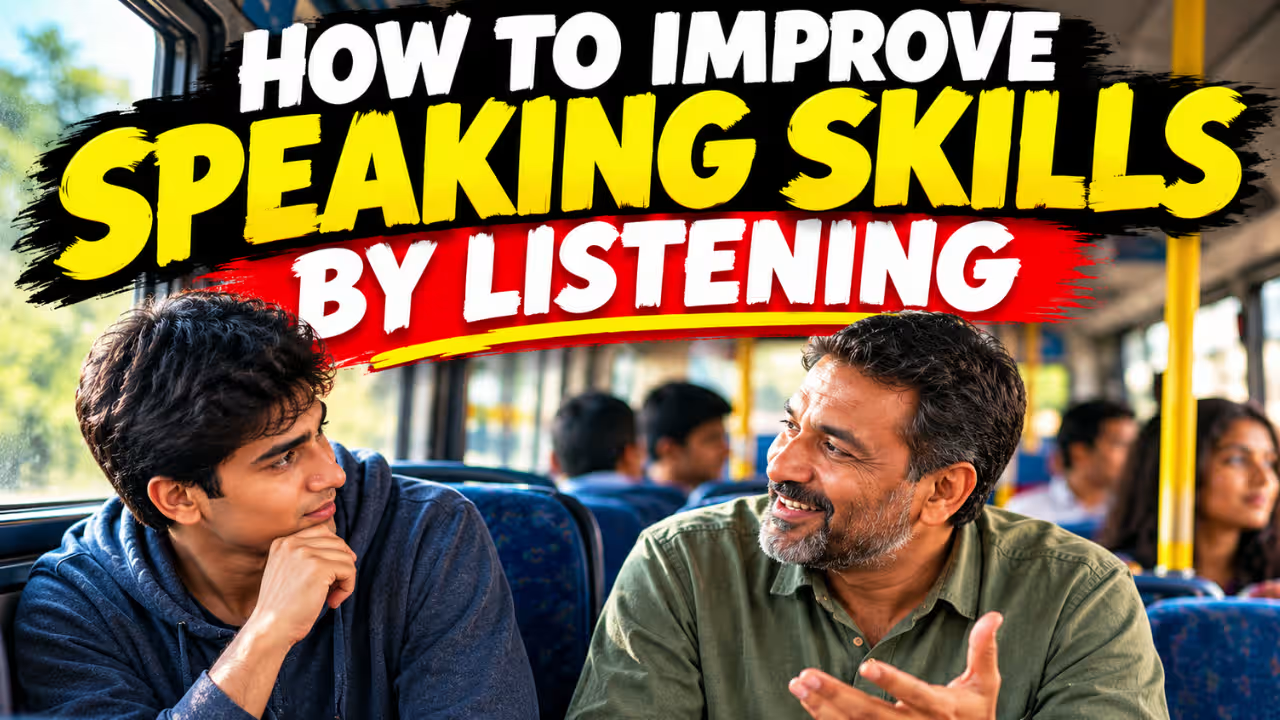
I take pride in the fact that I can captivate an audience with my speeches, but what exactly did I do to bring about such a transformation? It all started on a random bus ride, where I discovered how to improve speaking skills through listening.
If you, too, wish to see such a change in your speaking ability, then consider this article written specifically for you.
👉 If you want to build confidence and become mentally stronger, explore these 10 signs you are mentally stronger than you think.
Why Learning Public Speaking from YouTube and Articles Can Be Confusing
When my family and close friends realized, I was struggling to articulate my thoughts to others, they advised me to watch YouTube videos and read articles online about how to speak well in front of others.

I followed their advice and consumed a great deal of such content. To be honest, doing so left me thoroughly confused, as every article and video suggested a different method for improving one’s speech.
I even tried several of these methods, but for some reason, I didn’t succeed, so I eventually gave up on them. One day, while I was traveling by bus, a person came and sat next to me. He smiled at me, and I smiled back.
Those few minutes spent with that person on the bus changed my entire life.
- Note: I am not saying that it is impossible to learn how to deliver a good speech by watching YouTube videos or reading internet articles. Rather, my point is that consuming too many of them can lead to overwhelming confusion. There are certainly people in the world who have learned to speak well by using such resources, but if I may say so, I am not one of them.
If You Want to Learn to Speak, Learn to Listen
A person sitting near me on the bus struck up a conversation, and before long, he realized I was struggling to articulate my thoughts to him.
He asked, “Do you find it difficult to express your thoughts to others?” I nodded in agreement, looking down. He told me that if I wanted to learn how to speak, I first needed to learn how to listen to people.
I told him that I do listen to people, but I just can’t seem to speak up in front of them. He laughed and said, “See? You didn’t listen to my whole point and interrupted me.” I fell silent.
Offering me some advice, he said, “If you listen to people with full attention, your listening skills will improve. Only if you listen to others will they listen to you. By listening to others, you will learn how different people fearlessly express themselves in various ways.

Start with your friends and family members. Share things with them that you know but they might not, so that they listen to you fully. This will bring some improvement to your speech and give you the confidence that you can speak.
This daily practice will certainly improve your speaking ability. However, if you simply sit back out of fear, you will never be able to speak openly in front of others throughout your life.”
After saying this, he got off the bus. I didn’t know who he was. The method he suggested for improving my speech seemed boring and strange to me, as I had never read or seen anything like it before.
I finally thought, “What’s the harm in trying?” but little did I know just how costly this small attempt of mine would prove to be.
How Storytelling Helped Me Build Confidence in Speaking
It all started when I read some fascinating true stories on the internet. I was so interested in them that I became completely absorbed in reading.
One day, while I was reading these stories, my mother came over and asked, “I’ve been calling out to you for quite a while; why aren’t you answering?”
I told her I was reading a fascinating true story. When she asked, “Which story?”

I told her the entire story with complete confidence and without hesitation. As I began to tell the story in detail, she put aside all her chores and sat on the sofa to listen.
Simply put, I was completely absorbed in telling the story, and she was equally interested in listening to it. After I finished, she said, “You told it so well that it felt like I was actually seeing the story happen, not just hearing it.”
Her words gave me more confidence. After that, I shared several other stories with my sister and father, stories they hadn’t heard before. They listened carefully and eventually complimented me on my speaking ability. I started to feel a sudden boost in confidence in my storytelling skills.

I began telling the stories I had read to my friends in an interesting way. Even those friends who already knew the stories would listen to me tell them from start to finish, just to encourage me.
Whenever the whole family sat down for dinner at night, we would talk with one another. Surprisingly, I was usually the one doing most of the talking because I had gained the confidence to speak openly in front of my family and friends.
I had realized that if I spoke, my friends and family would listen carefully instead of laughing at me or making fun of me.
I remember one day when some guests visited our home. When my father asked me to talk to them, I suddenly became nervous. My father’s friends started laughing as they looked at me, which made me even more afraid to speak in front of them.

I immediately got up and went to my room. I realized then that while speaking in front of friends and family was easy, speaking to strangers was very difficult.
I even began to wonder if my speaking was actually terrible and if my family and friends had only listened to me out of kindness so they wouldn’t discourage me.
Many such negative thoughts started filling my mind, making me feel weaker and more insecure.
How I Overcame My Fear of Speaking to Strangers
My sister rushed into the room, and I told her about my problem. She pleaded with me, saying, “If you don’t want to say anything, you can just sit quietly, but please come outside and join the guests.”
I went out and sat with the guests. Dad and his friends were chatting away, and no one was paying any attention to me. My sister looked at me and asked, “Have you read any true stories on the internet that we don’t know about?”
I looked at her in surprise. She was ready to listen, even though Dad and his friends were still busy talking. I began telling my sister a story I had read in a book a few days earlier.

As I told the story, the guests sitting there began to listen as well. Perhaps they were enjoying my storytelling. Soon, the living room became quiet, and only my voice could be heard. Everyone was listening carefully to the story I was telling.
When the story ended, the guests asked me a few questions about it, which I answered with complete confidence. Afterward, I chatted with them for a while. As they were leaving, they told everyone that I was a really good speaker.
Hearing this made me feel incredibly proud, and my fear of speaking in front of strangers had almost disappeared.
However, that wasn’t the end of the story. A week later, there was a major function at Dad’s office where many employees were expected to attend with their families.
We were going to accompany Dad to the event, but what happened there completely changed my perspective.
👉 If self-doubt is stopping you from expressing yourself confidently, learn how to overcome impostor syndrome and build confidence.
How to Speak Confidently and Express Your Thoughts Clearly
We arrived at the event. As soon as we got there, several of my father’s colleagues came over to greet him and gathered around us to chat.
I simply listened to their conversations because I wanted to learn how different people speak. I noticed that while some people spoke very clearly and slowly, others spoke very quickly.
Some people beat around the bush instead of getting straight to the point, while others spoke bluntly, without worrying about whether their words might hurt the listener.

At that event, I simply listened to people, and I decided to develop my own way of expressing myself—a specific speech pattern. I also spoke with several strangers there.
My confidence grew, and I developed a structured way of presenting my views to others. Following this method boosted my confidence so much that I am now a successful speaker.
Although I don’t go around giving speeches everywhere because I prefer writing, I have given speeches on stage and spoken to groups at various places by following this pattern.
I hadn’t realized that using the right words could help resolve even serious issues. By choosing my words carefully, I have resolved disputes and family conflicts that others thought were impossible to fix.
I am outlining my speech pattern below. You are welcome to follow it, although you might find it a little unusual.
How to Improve Your Speaking Skills and Speak Confidently
Here, I am describing the speech patterns I followed to become a successful speaker.
- Listen to the people around you—friends and family members. This helps you understand how different people speak.
- Listen carefully when someone offers advice or corrects you; this builds your tolerance. Developing tolerance is important because, when speaking to others, you will encounter people who dislike your speech or way of talking, yet this shouldn’t bother you at all.
- Read about stories or topics that interest you and gather as much information as possible. Then, share what you’ve learned confidently with your mother—or call her—since a mother will never criticize her child’s speech. If your mother isn’t around, share it with your sister or someone who loves you dearly.
- Practice speaking with strangers. For instance, if you are traveling by bus or metro, try striking up a conversation with a stranger. It won’t matter to them whether your speech is good or bad, but the fact that they are listening to you will certainly boost your confidence.

- When sitting among a group of people who are conversing, listen quietly and attentively; wait until they have finished speaking before you begin. Doing this ensures their attention shifts to you. If you try to interject while others are talking, no one will listen, which could leave you feeling discouraged.
- Speak in a normal tone and articulate clearly. While speaking, make eye contact with the people around you, shifting your gaze from one person to another; this helps you gauge how attentively they are listening to you. This will further boost your confidence and enthusiasm for speaking. If you try to speak while looking down or avoiding eye contact, you will struggle to express yourself effectively.
- If you wish to convey something important to someone, try narrating it as a story; present the various aspects of the matter one by one at a measured pace so the listener can fully grasp the message. You may not acquire this skill overnight, but with practice, a time will come when even a casual conversation will allow the listener to not just hear your words but visualize the entire scenario in their mind.
- Do not worry about what others might think while you speak; stumbling or making a mistake in your speech does not make you a bad person.
- When listening to others, do not merely hear the words; try to form a mental image of the entire narrative. The greatest advantage of this is that when you speak to others later, you won’t need to struggle to recall or plan exactly what to say. As the images form in your mind, the words will naturally flow as you share your thoughts.
For more practical advice on improving your public speaking skills, explore Toastmasters International’s guide to writing and delivering a speech.
If anything is unclear, please leave a comment immediately so we can provide free personal guidance. Improving your speech takes time and practice, so there is absolutely no need to panic.
👉 Ready to improve yourself further? Explore this guide to personal development, confidence, and success and take the next step in your growth journey.