
When someone mentions Ayodhya, the first name that comes to mind is Lord Rama. Ayodhya is considered one of the holiest places in India and is also regarded as the birthplace of Lord Rama.
It is a sacred place where the name of Lord Rama echoes in every street. This soul-soothing place recently witnessed the grand opening of the Ayodhya Temple, which attracts devotees from all over the world.
If you are planning an Ayodhya itinerary for 2 days, there is no better place for a peaceful and spiritually enriching pilgrimage. Ayodhya boasts numerous tourist attractions that will leave you exhausted from exploring.
If you love spiritual travel, you may also explore our detailed Rishikesh itinerary for 2 days, another peaceful pilgrimage destination known for its divine atmosphere and sacred river aartis.
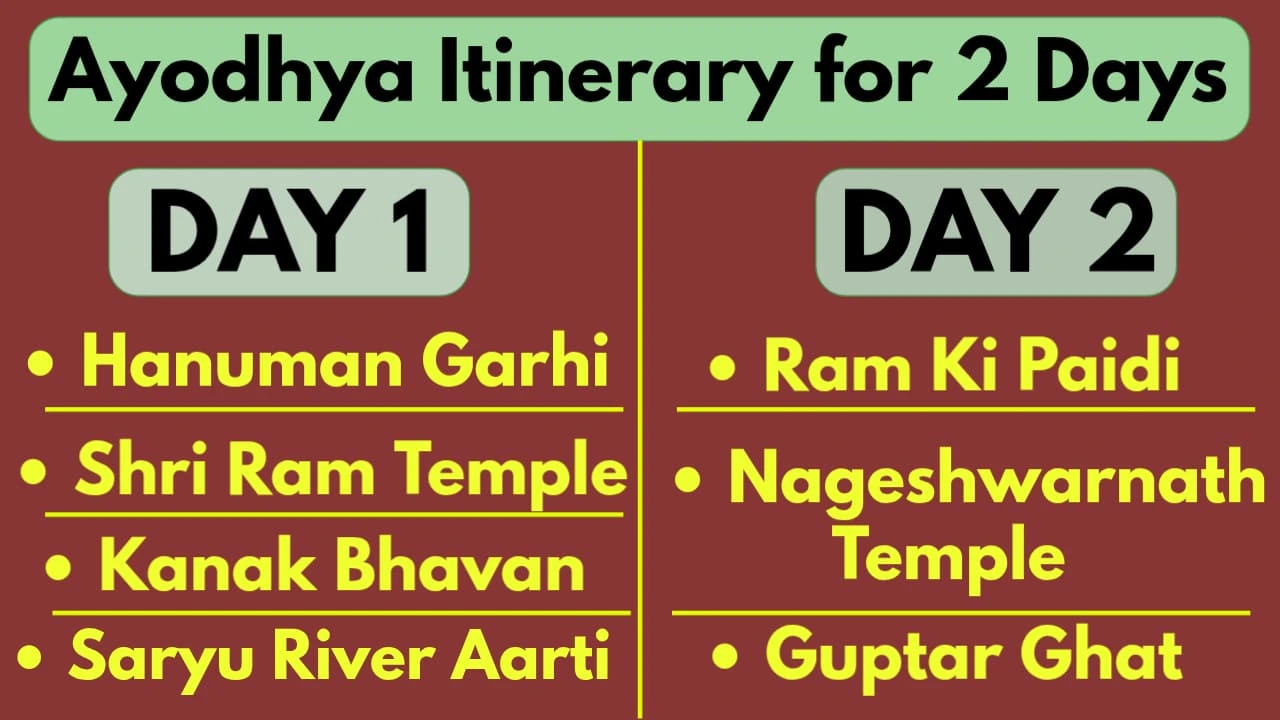
From the magnificent Ayodhya Temple to the divine aartis held in the city, we will tell you how to travel without getting tired in two days through this carefully planned itinerary, which you should definitely read and follow.
Have you ever experienced spiritual peace in your life? If not, be prepared for this Ayodhya trip.
Are Two Days Enough for Ayodhya?
Absolutely. While there are many small tourist destinations around Ayodhya, it is most important to see the main attractions, such as the sacred temples, ghats, and other spiritual sites.
The primary focus of most devotees visiting Ayodhya is to visit the magnificent Ram Temple and have darshan of the virtuous Lord Shri Ram. If this is your focus, then two days are enough to explore Ayodhya comfortably.
If you are visiting Ayodhya with an elderly person, or if you are an elderly traveller yourself, you should follow our Ayodhya itinerary for 2 days, which will help you cover the main attractions along with a peaceful visit to the Ram Temple.
Day 1: Visiting the Ram Temple and the Holy Ghats
If you want to start your Ayodhya trip without any fatigue, then according to our Ayodhya itinerary for 2 days, you should begin your journey from Hanuman Garhi, not the Ram Temple in Ayodhya.
1) Visit Hanuman Garhi (Go here before visiting Shri Ram)
Every traveler to Ayodhya thinks of visiting Lord Shri Ram’s temple first, but according to tradition, this is not considered appropriate. You should start your Ayodhya trip from Hanuman Garhi, not the Ram Temple.
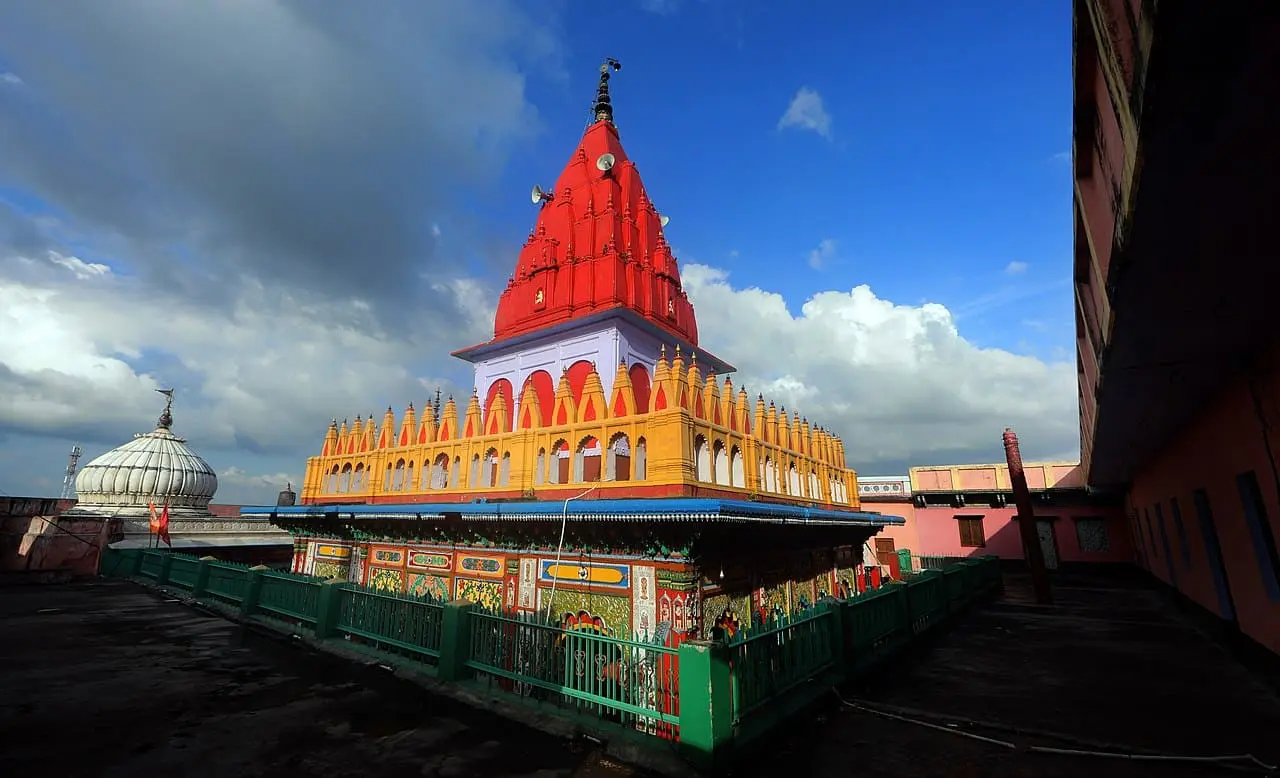
Lord Shri Ram gave his supreme devotee, Hanumanji, the honor that any devotee coming to Ayodhya for his darshan must first worship Hanumanji.
Devotees who visit the Ram Temple without first seeking blessings at Hanuman Garhi are believed to have incomplete darshan.
Situated at an elevated location, Hanuman Garhi is a very beautiful and spiritually powerful place, where you may have to climb a few stairs. The stunning view of Ayodhya from Hanuman Garhi will undoubtedly mesmerize you.
That is why you should start your Ayodhya trip from Hanuman Garhi rather than from the grand Ram Temple in Ayodhya.
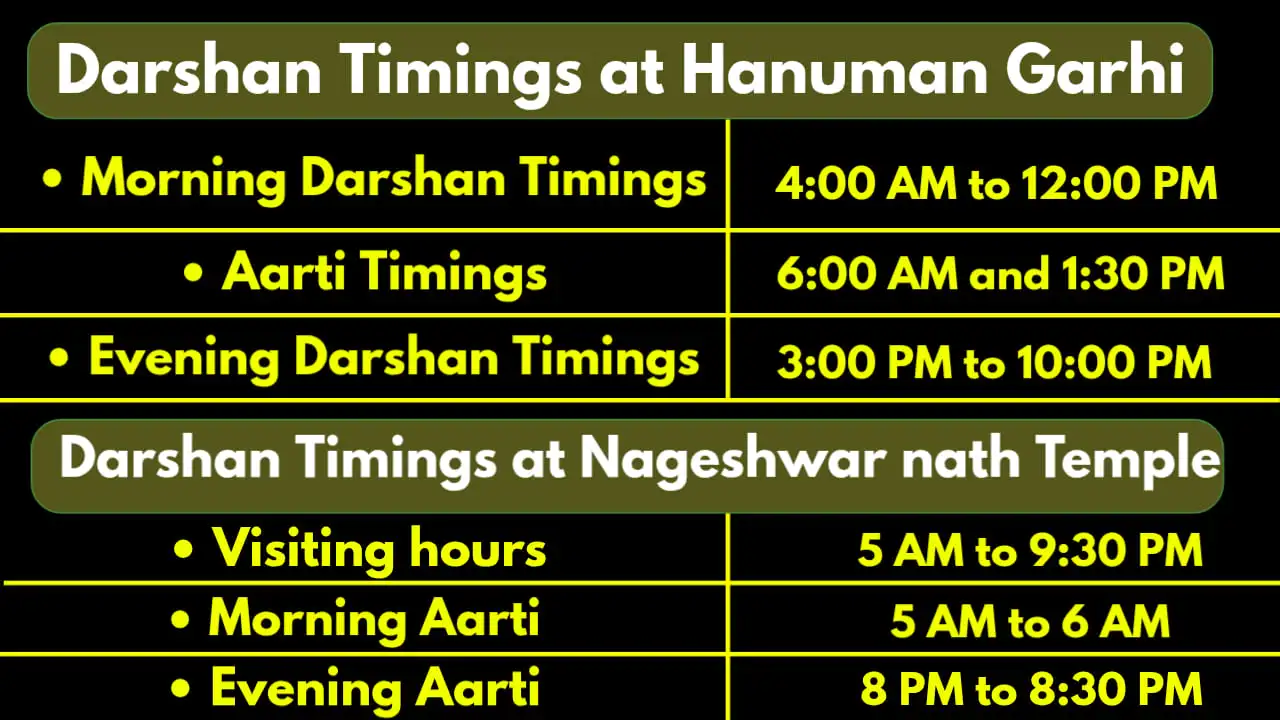
Darshan Timings at Hanuman Garhi:
• Morning Darshan Timings: 4:00 AM to 12:00 PM
• Aarti Timings: 6:00 AM and 1:30 PM
• Evening Darshan Timings: 3:00 PM to 10:00 PM
Note: Darshan timings are subject to change.
2) Visiting the Ram Temple
After completing your darshan at Hanuman Garhi, you should then proceed to the Ram Temple in Ayodhya, as this follows the traditional spiritual order of visiting.
The magnificent Ram Temple in Ayodhya is always very crowded. If you want to have a good view of the temple without the crowds, you must get up early in the morning and reach the temple early.
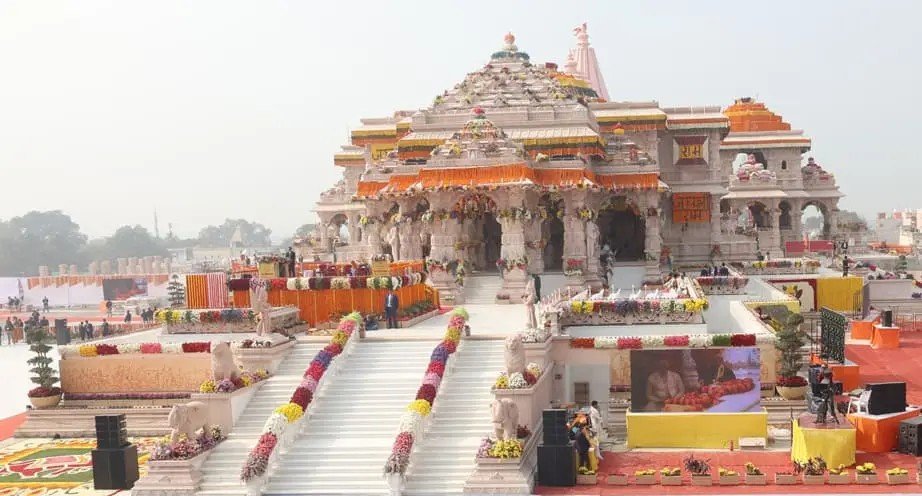
The temple is especially crowded in the evenings, so go as early as possible in the morning to have darshan of Lord Shri Ram.
While visiting the Ram Temple, you must keep a few things in mind, which are briefly explained below:
• Wake up as early as possible and reach the Ram Temple early to stand in the queue of devotees, as the line grows longer as time passes.
• Before arriving at the Ram Temple, be sure to follow the dress code. Girls and women should not enter the temple wearing skimpy or short clothes. All devotees are advised to wear simple, body-covering clothing.
• Before entering the Ram Temple, every devotee undergoes a security check. If you want this process to be completed quickly, carry minimal luggage when entering the temple.
Note: You should spend most of your time in the grand temple complex, as you will experience a unique and miraculous sense of peace here, which will fill your mind with calmness.
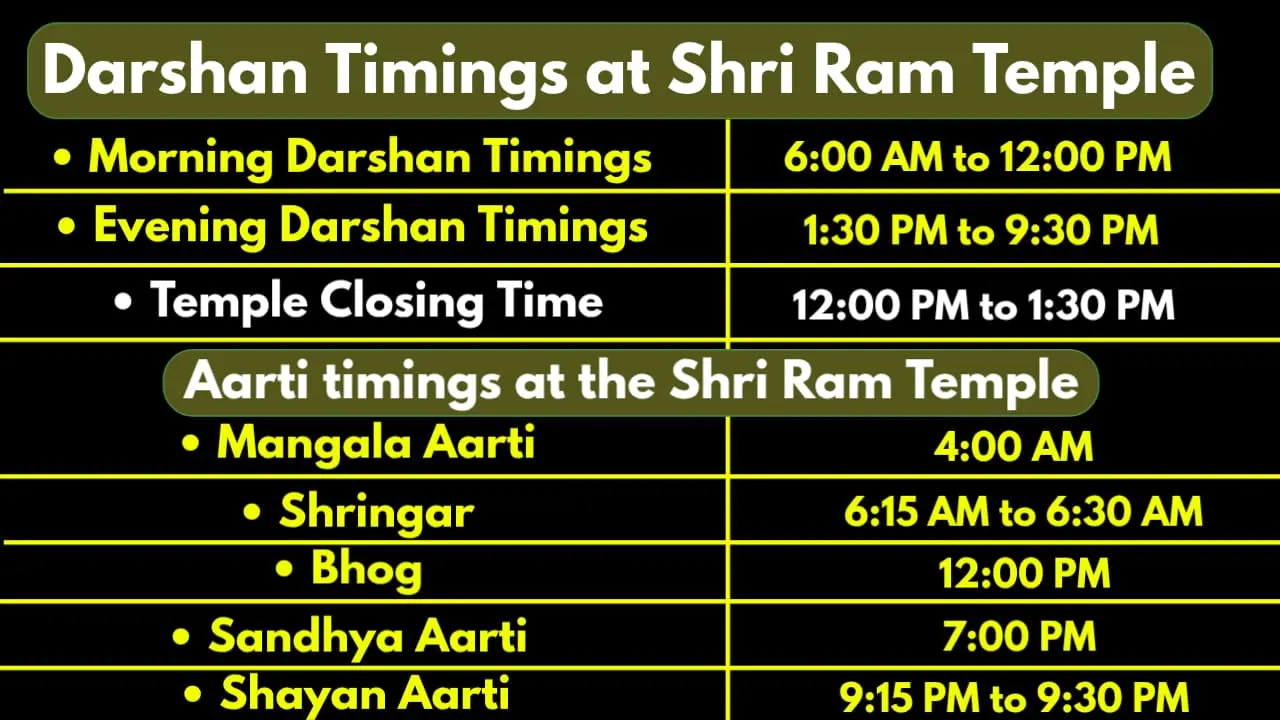
Timings for Visiting Lord Shri Ram at the Ayodhya Temple:
- Morning Darshan: 6:00 AM to 12:00 PM (crowds are lighter at 6:00 AM)
- Evening Darshan: 1:30 PM to 9:30 PM (crowds are heavier after 5:00 PM)
- Afternoon Temple Closing Time: The temple closes from 12:00 PM to 1:30 PM (to allow the deity to rest and offer prayers).
Do you want to attend the Aarti at the Ayodhya Ram Temple? If so, you need to obtain a pass. You can find accurate information on how and where to obtain this pass at your hotel or in the shops around the temple.
The Aarti timings at the temple are given below:
- Mangala Aarti (performed at 4:00 AM)
- Shringar (Lord Shri Ram’s adornment is performed from 6:15 AM to 6:30 AM, and an Aarti is also performed at that time)
- Bhog (Aarti is also performed at 12:00 PM when offerings are made to the Lord)
- Sandhya Aarti (Evening Aarti is performed at the temple at 7:00 PM and is very crowded)
- Shayan Aarti (Shayan Aarti is performed at the temple from 9:15 PM to 9:30 PM, after which the temple is closed)
Darshan of Lord Shri Ram, also known as Ram Lalla, is free at the temple, but a pass is required to participate in the Aarti.
Where and what to do for lunch in Ayodhya?
After visiting Lord Ram at the magnificent Ram Temple, you’ll head to Kanak Bhawan as part of your Ayodhya itinerary for 2 days. It’s midday, and due to the crowds in Ayodhya, you’re probably hungry, right?
If so, near Kanak Bhawan, there is Kanak Rasoi, where the traditional thali is the most famous in Ayodhya. The dishes served in this traditional thali are absolutely delicious.
Only eat this traditional thali if you’re very hungry; otherwise, you can fill your stomach with a small snack. You’ll find all kinds of food easily in Ayodhya, so don’t worry about food here.
3) Explore Kanak Bhavan and the Surrounding Area
After lunch, you should visit Kanak Bhawan, which is very close to the Ram Temple, especially if you are following this Ayodhya itinerary for 2 days. It’s a palace that Mother Kaikeyi gifted to Lord Rama and his wife, Sita.
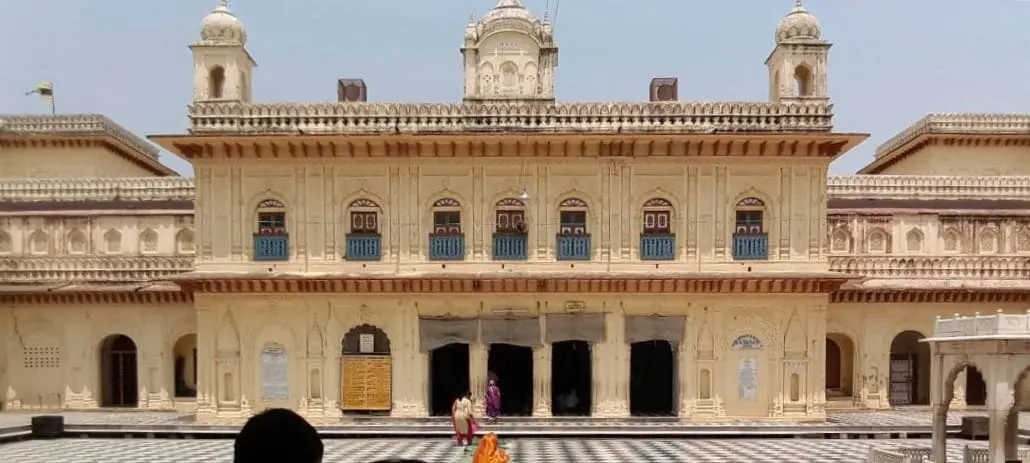
This palace is renowned for its artwork. You’ll be amazed by the artwork within. The atmosphere is extremely positive, peaceful, and soothing.
Some of the statues in Kanak Bhavan are so beautiful that people from all over the country and abroad come to see them.
Visiting Hours:
- Morning: 8 to 11 AM
- Evening: 4:30 to 9:30 PM
Aarti Timings:
- 5 AM (Mangala Aarti)
- 12 PM (Special Aarti)
- 6 PM (Sandhya Aarti)
Note: The temple is closed between 11 and 12 PM and reopens for darshan between 4 and 4:30 PM. Darshan is free, and it gets very crowded in the evening.
After visiting Kanak Bhawan, you should return to your hotel and rest. In the evening, when you wake up, head straight to the Saryu River Ghats, Ayodhya’s most sacred river.
4) Special Saryu River Aarti
A special sunset aarti takes place at the Saryu Ghats between 6 and 7:30 PM. People from across the country and abroad come to Ayodhya to witness this aarti.
If you follow our Ayodhya Itinerary for 2 Days, you’ll spend the entire evening at the Saryu Ghats, where the atmosphere is serene and peaceful.
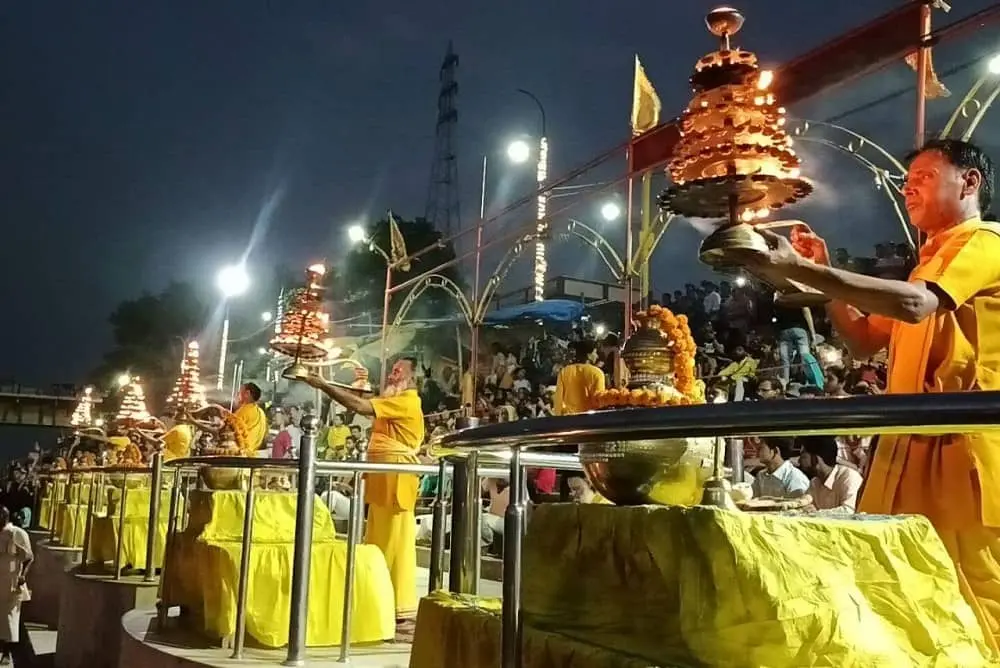
In the evening, you’ll witness a breathtaking sight of diyas floating in the Saryu River, a sight you’ve never seen before.
The resounding chants of mantras add to the spiritual atmosphere at the Saryu Ghats, which you must experience.
What and where to have dinner in Ayodhya?
After the Aarti, head straight to the Ram Temple for dinner, which is very close by.
Ayodhya’s largest market is located near the Ram Temple, where you can enjoy shopping and a delicious dinner.
If you’re particularly hungry, you can sample Shahi Paneer, Dal Makhani, and Ayodhya’s local delicacies, such as Baati Chokha, at local restaurants.
Baati Chokha is a famous food in Ayodhya, and you must try it for dinner. After dinner, return to your hotel and relax according to the “Ayodhya Itinerary for 2 Days.”
Day 2: Spiritual and Mythological Sites
On the second day, you should wake up early and have breakfast. The second day of our Ayodhya itinerary for 2 days begins at Ram Ki Paidi, a sacred site considered one of Ayodhya’s main attractions.
1) Ram Ki Paidi (Famous for Holy Bathing)
The Saryu River in Ayodhya is considered extremely sacred. There is a long chain of ghats along the river, known as Ram Ki Paidi.
Any traveler visiting Ayodhya is sure to visit Ram Ki Paidi and take a dip in the Saryu River from the sacred ghats located there.
You must visit Ram Ki Paidi, which is famous for holy bathing in Ayodhya, and take a dip in the Saryu River. It is believed that anyone who takes a holy dip in the Saryu River is cleansed of all their sins.
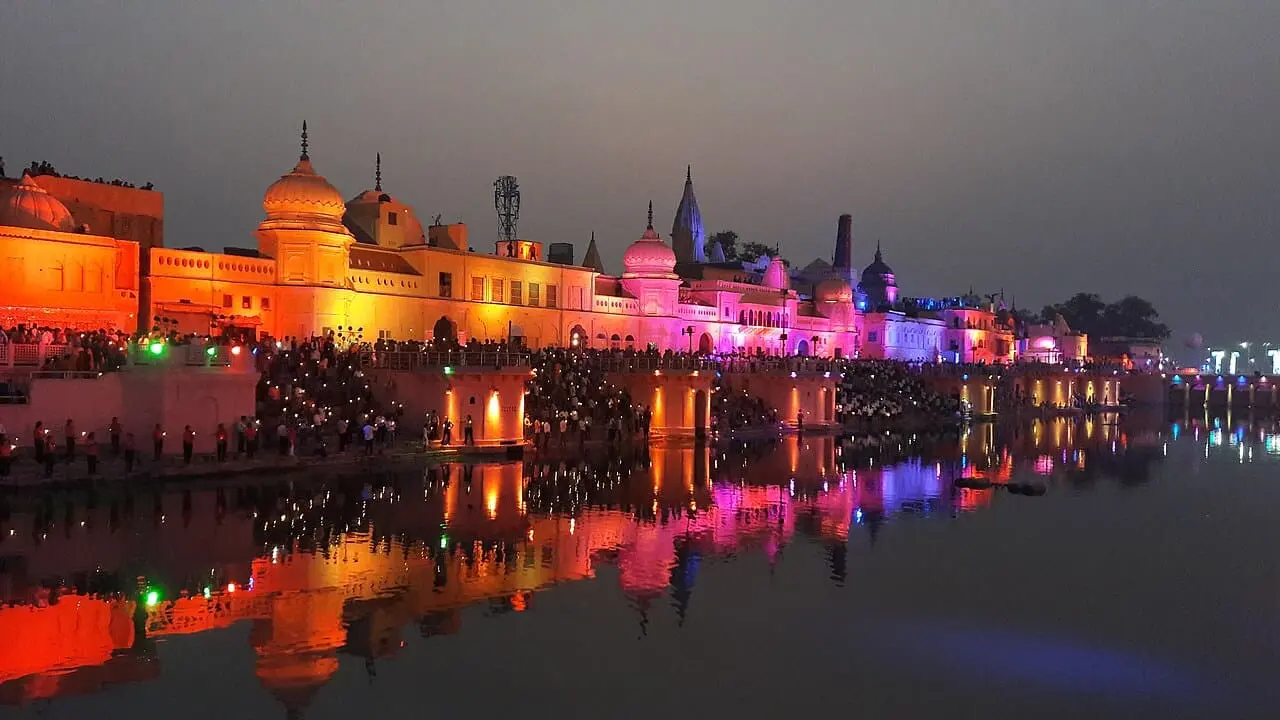
If you wake up early in the morning and go to Ram Ki Paidi, you will witness a wonderful sunrise that you may have never seen before in your life.
Do you like to meditate? If so, reach Ram Ki Paidi at sunrise, as many pilgrims come to this peaceful and sacred place just to meditate in the morning.
2) Nageshwarnath Temple (This Temple Was Built by Kusha, Son of Ram)
Spend as much of your morning as possible at Ram Ki Paidi, as the atmosphere here is serene. Afterward, visit Shri Nageshwarnath Temple, one of the oldest temples in Ayodhya.
This is a Shiva temple built by Kusha, the son of Lord Shri Ram. It is considered one of the most ancient temples in Ayodhya.
If you are a devotee of Lord Shiva and wish to explore another powerful Jyotirlinga destination, you should also explore our detailed Ujjain itinerary for 2 days, where the sacred Mahakaleshwar Temple attracts thousands of devotees every day.
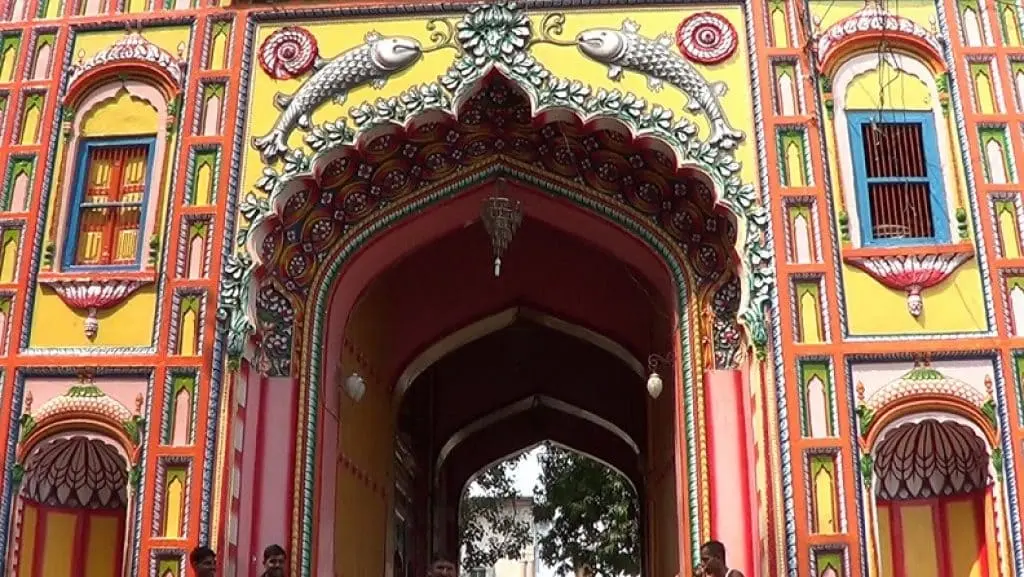
As soon as you enter this temple, you will feel a miraculous sense of peace, so you must definitely visit it to experience this divine atmosphere.
The darshan and aarti timings at Nageshwarnath Temple are briefly listed below, according to which you can plan your visit.
- Visiting hours: 5 AM to 9:30 PM
- Morning Aarti: 5 AM to 6 AM
- Evening Aarti: 8 pm to 8:30 pm
Nageshwarnath Temple is very close to Ram Ki Paidi, so be sure to visit this temple to seek the blessings of Lord Shiva.
What and where to have lunch in Ayodhya?
By the time you visit the Nageshwarnath Temple, it will be afternoon, and you’ll start to feel hungry. Maurya Ji’s Dahi Jalebi is very famous in Ayodhya, and you must try it.
If you suffer from diabetes, you should limit your intake of Dahi Jalebi, as it is very sweet. Gabbar’s Pakodas near Ram’s Pedi are also very famous in Ayodhya, and you can try them.
If you don’t like these, you can go to any restaurant and eat your favorite food for lunch. After lunch, go to the hotel and rest.
3) Guptar Ghat: (Lord Rama took Jal Samadhi here)
After resting in the evening, you should visit Guptar Ghat, one of the most popular places in Ayodhya. It is believed that Lord Rama took Jal Samadhi here.
Not all travellers visiting Ayodhya visit this place, so it is less crowded. According to our “Ayodhya Itinerary for 2 Days,” you must visit Guptar Ghat.
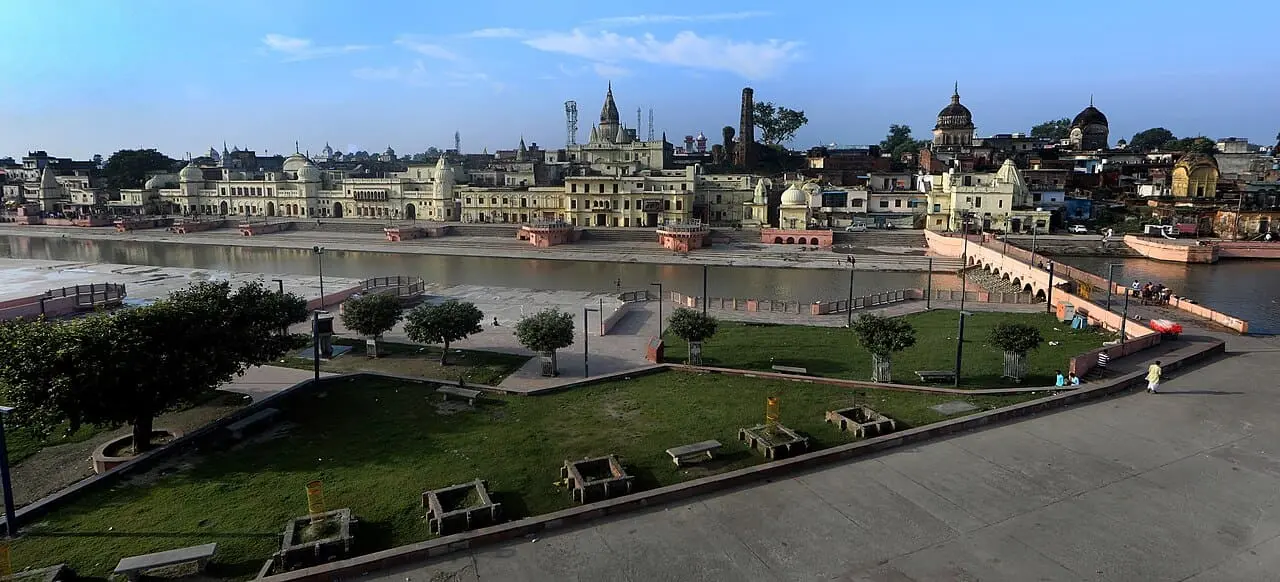
This is a sacred place where you can also see the Ram Janaki Temple, the Old Charan Paduka Temple, the Narsingh Temple, and the Hanuman Temple.
The evening will pass by while you explore Guptar Ghat. If you have time in the evening, you can visit other tourist places in Ayodhya, such as Dasharath Mahal, Treta Ke Thakur, the Tulsi Memorial Building, and the Sun Pillar.
If you are tired, go to your hotel and start packing for your return trip.
What and where to have dinner in Ayodhya?
During your Ayodhya trip, you should try Ram Rasoi for dinner, which is served free of charge to all devotees. Ram Rasoi offers nine delicious dishes, all free of charge.
If you prefer, you can also have dinner at the Aamava Ram Temple, where devotees are served delicious food free of charge.
If you’re really hungry, there are many restaurants around Hanuman Garhi that serve traditional Ayodhya dishes.
If you’d prefer a lighter meal, you can visit the market surrounding the Ayodhya Ram Temple and sample the local street food.
After dinner, you’ll return to your hotel, sleep, and conclude your “Ayodhya Itinerary for 2 Days.”
Best Time to Visit Ayodhya
Whenever you visit Ayodhya, you’ll find it crowded all the time. We’ll briefly explain when you should and shouldn’t visit Ayodhya through our Ayodhya Itinerary for 2 Days.
- October to March: Although Ayodhya is crowded all the time, if you visit on working days between October and March, you’ll find it less crowded. The weather in Ayodhya is pleasant during this time.
- Never visit Ayodhya during festivals or vacations, as it can be very crowded during these times.
- If you’re visiting Ayodhya during the summer, avoid going out in the afternoon, as it can be very hot.
- You can visit Ayodhya during the rainy season, but heavy rain can often cause you to get stuck on the way. Due to heavy rain, you may not be able to fully explore all of Ayodhya’s tourist attractions.
If you are planning a spiritual journey to Kashi, don’t miss this detailed guide on the Varanasi Itinerary for 2 Days to explore the city’s most sacred places.
Ayodhya Itinerary for 2 Days – Travel Tips
- All the temples in Ayodhya are usually crowded, so avoid misbehaving with devotees or security personnel.
- A separate gate has been created for elderly and disabled devotees; please allow them to enter the temple from there.
- If you are traveling with an elderly person, or if you are elderly yourself, wheelchair assistance is available at the temple. To obtain one, visit the counter located near the temple entrance and request assistance.
- Avoid going out alone at night in Ayodhya without a local companion.
- Ayodhya is a holy city, so do not pollute it by throwing garbage on the streets.
- Do not attempt to damage or disrespect any religious site in Ayodhya, as doing so is illegal.
Final Thoughts:
By following our “Ayodhya Itinerary for 2 Days,” you will be able to explore Ayodhya’s major tourist attractions comfortably without feeling exhausted.
If you encounter any difficulties during your trip, please let us know in the comments so that other devotees do not have to face the same problem.